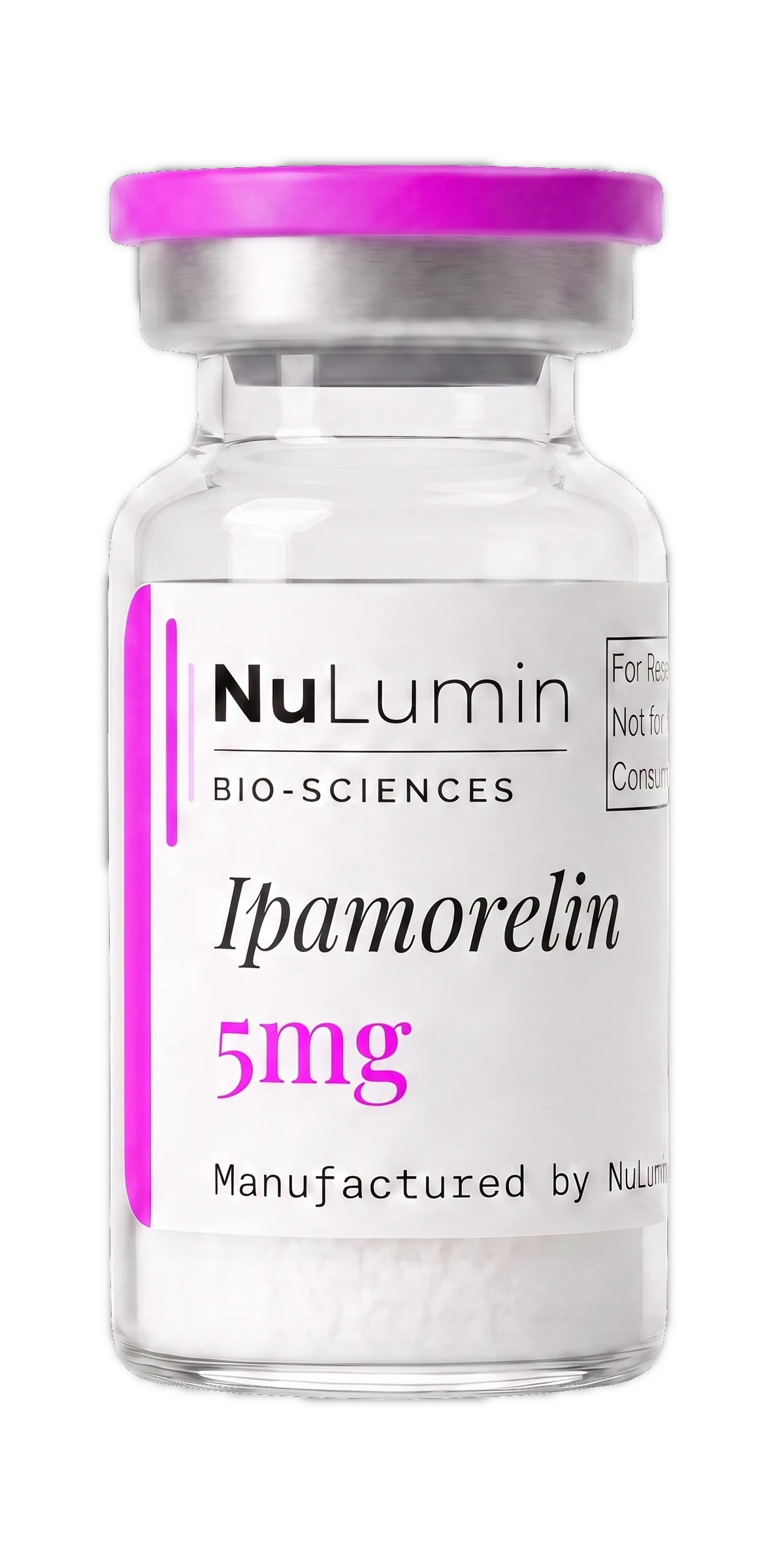
Current lot5mg
Lot
NUL-AOD05-20260828-01
- Purity spec
- ≥99% HPLC · Verified
Buy 1, get 1 free: today's window closes at 11:59 PM PT

Seasonal offer · Fall 2026
The Fall Special.
Buy one, get one free on eligible compounds. Same compound, same size, added automatically.
Shop the Fall Special1 5mg vial
1 vial of 5mg, $22.49 each, $44.99 total, saving $44.99, plus 1 free vial added automatically
Out of stock - get notified when it returns
For Research Use Only. Not for Human Consumption.
Also known asAOD 9604 · hGH frag 176-191 · hGH fragment 176-191
In-stock orders placed before 2:00 PM PT ship the same business day (Monday–Friday, excluding federal holidays). Orders placed at or after the cutoff, on weekends, or on holidays ship the next business day.
Estimated delivery: 2–5 business days after dispatch.
Limited-time free shipping on every order. No minimum. No code needed.
Individually sealed clear-glass vials - room-temperature stable
Secure checkout · Visa & Mastercard
Tracked shipping, US-only - see the shipping policy.Every batch clears the same eight analyses before it is offered for sale, and the document that proves it is findable by whoever ends up holding the vial.
5 lots2 for 5mg
Lot
NUL-AOD05-20260828-01
Lot
NUL-AOD5-20260611-01
Lot
NUL-AOD10-20260914-01
Lot
NUL-AOD10-20260630-01
Lot
NUL-AOD-20260809-04
Each certificate covers one batch. The lot code is printed on the vial and on the box, so the report you pull up is the one for the batch in your hand.
Run in this order, on this compound and on every other one in the catalog. Each one carries the line a batch has to clear, and then what the certificates on record actually came back as.
01/ 08Mass spectrometry
A white powder tells you nothing. It is the one thing about this vial that no amount of looking will settle, which is why the first analysis is not a measure of quality at all. The spectrometer weighs the molecule itself, and the weight either matches the compound printed on the label or the batch never becomes a product.
Confirms the molecule in the vial is the compound named on the label.
Held toMW matchMolecular weight matches the target compound
02/ 08Visual
The only one of the eight you could run yourself. An intact cake sitting in the base of the glass, one solid piece, no browning and nothing drifting. It is looked at before the batch is released, so you are never the first person to.
Discoloration, clumping or particulates can indicate degradation, contamination or moisture ingress before analytical testing even begins.
Held toLyophilized powder cakeLyophilized powder cake; free of visible particulates
On recordPass on all 14 certificates on record.
03/ 08HPLC @ 274nm
The figure everyone asks for first, and the one worth reading backwards. The chromatogram separates the target peptide from everything the synthesis left with it, and the specification is a FLOOR: it is the line a batch has to clear, not a number anything is capped at.
Measures what fraction of the material is the complete target peptide versus synthesis byproducts, truncated sequences or degradation products.
Held to≥99%
On recordPass on all 14 certificates on record.
The target peptideEverything else
04/ 08qPCR
The only acceptable outcome here is nothing at all. Bacteria, yeast and mold are each assayed separately by qPCR, and there is no partial credit: the specification is not-detected in a full gram, for every analyte on the list.
Confirms the finished vial is free of viable bacteria, yeast and mold.
Held toNot detectedNot detected in 1g (all analytes)
On recordNot detected on all 14 certificates on record.
05/ 08LCMS
Four micrograms in a kilogram is four parts in a billion. Against a single gram of material the limit is a hairline, which is exactly why mould metabolites are looked for by instrument rather than by eye: they arrive with raw material at concentrations no inspection could ever catch.
Mycotoxins are toxic fungal metabolites that can contaminate raw materials.
Held to<4 µg/kgAflatoxins B1/B2/G1/G2 · Ochratoxin A
On recordNot detected on all 14 certificates on record.
06/ 08Water Activity Meter
This is the slow one. A lyophilized cake pulls water out of whatever air reaches it, and that water takes up room the active material used to. 0.65 aw is where microbial growth becomes possible, so the panel draws its line there. A batch is released for being clear of that line, not for touching it.
Lyophilized peptides absorb atmospheric moisture, which dilutes active content per mg and accelerates degradation.
Held to<0.65 aw<0.65 aw (threshold for microbial growth)
On record0.35 to 0.45 aw measured on the 9 certificates that print a reading.
07/ 08GC headspace
Every synthesis uses solvents. The only question that matters afterwards is what stayed behind, and it is not a question the finished powder answers on its own. Headspace GC reads the vapour standing above the material, where a solvent shows itself long before anything else would.
Solvents used in synthesis and purification can interfere with biological assays and affect cell viability if they remain in the final product.
Held toICH Q3CICH Q3C Class 2/3 limits
On recordBelow the ICH limits on all 14 certificates on record.
At raw material inspection
08/ 08ICPMS
Arsenic. Cadmium. Lead. Mercury. Four metals named one at a time rather than folded into a phrase, because the entire purpose of this analysis is to be able to say they are not in the vial in any amount that counts. USP <232> is the standard that decides what counts.
Heavy metals accumulate in biological systems and interfere with enzyme activity, receptor binding and cell viability.
Held toUSP <232>Arsenic · Cadmium · Lead · Mercury
On recordBelow the USP limits on all 14 certificates on record.
At raw material inspection
Nothing above is specific to AOD-9604. It is the standard panel every NuLumin lot is released against: the same methods, the same specifications, batch after batch.
Synthetic C-terminal fragment of hGH (residues 177–191) with tyrosine substitution · lyophilized powder · ≥99% purity (HPLC) · MW 1815.08 Da.
hGH C-terminal fragment (177-191) investigated for adipocyte receptor signaling independent of the IGF-1 axis.
The rows above describe the sealed material as shipped. Reconstitution and downstream handling are the researcher's protocol.
Research Use Only
For Research Use Only. Not for Human Consumption. Not a drug, supplement, or food product. All NuLumin Bio-Sciences products are designated Research Use Only (RUO). Not intended for therapeutic use or diagnostic purposes. Purchasers assume responsibility for ensuring compliance with all applicable regulations.
What arrives, how it is sealed and kept, what the certificate covers, and the terms it is sold under - answered here rather than after you have paid. For Research Use Only. Not for Human Consumption.
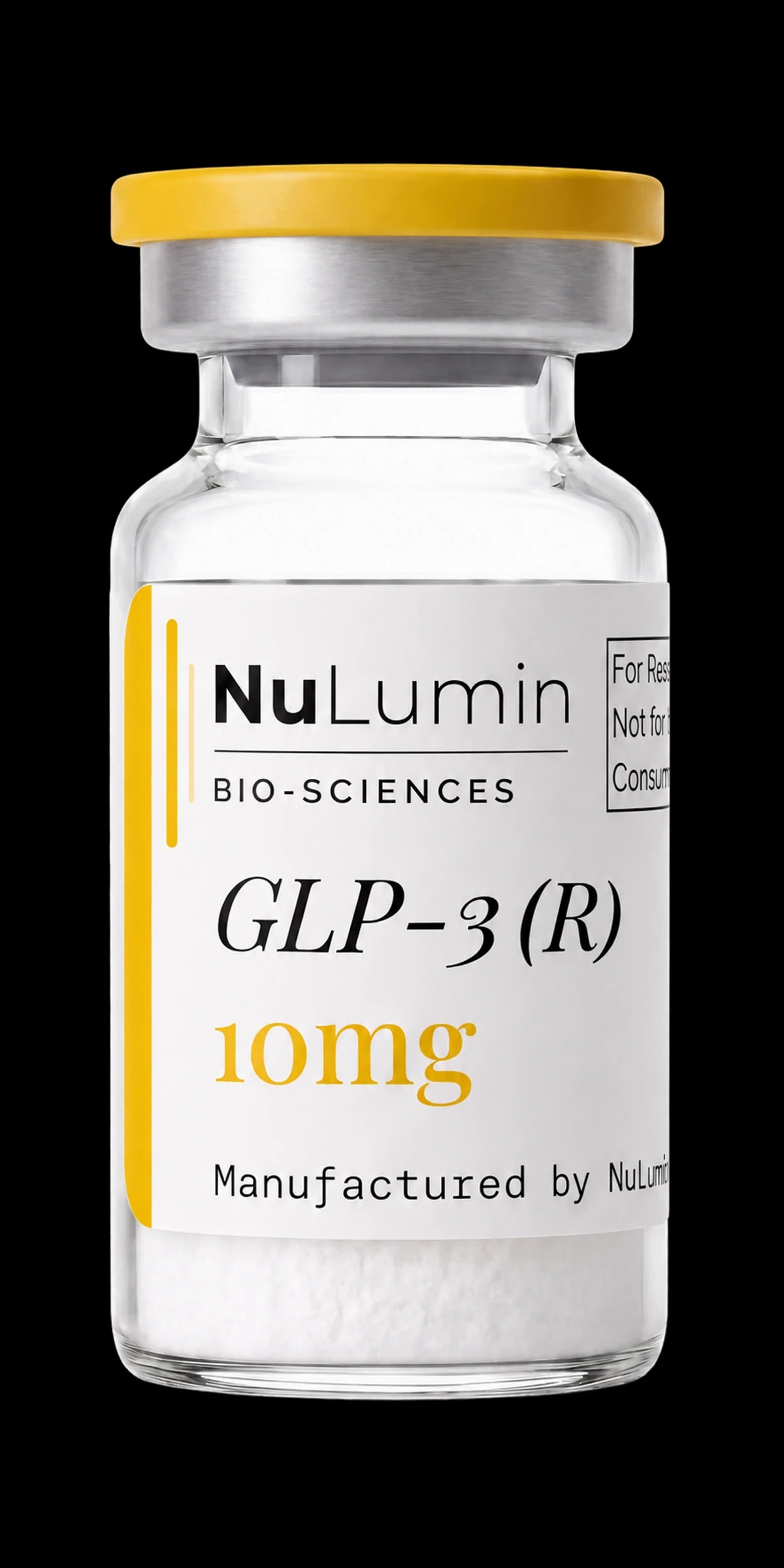
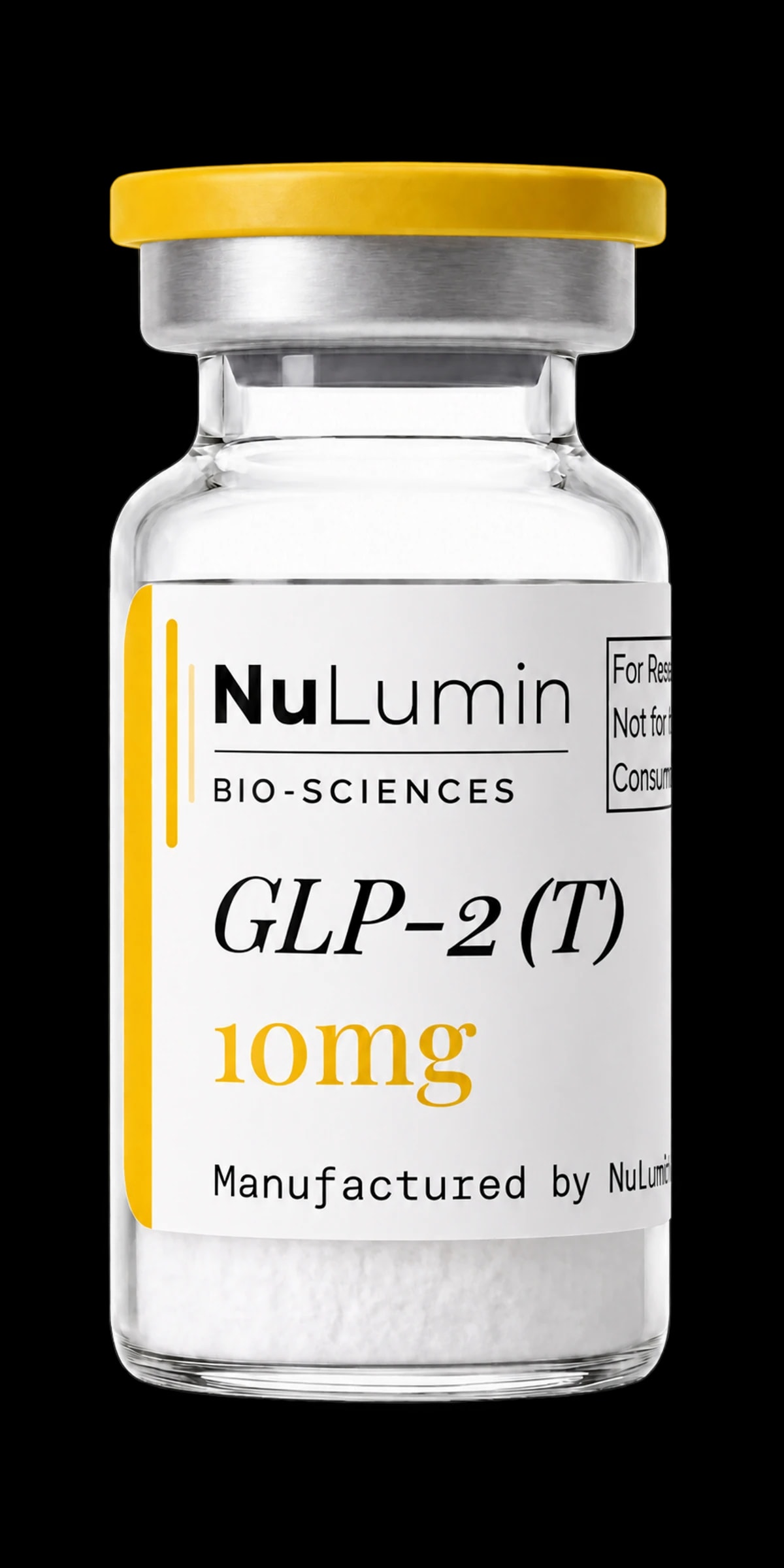
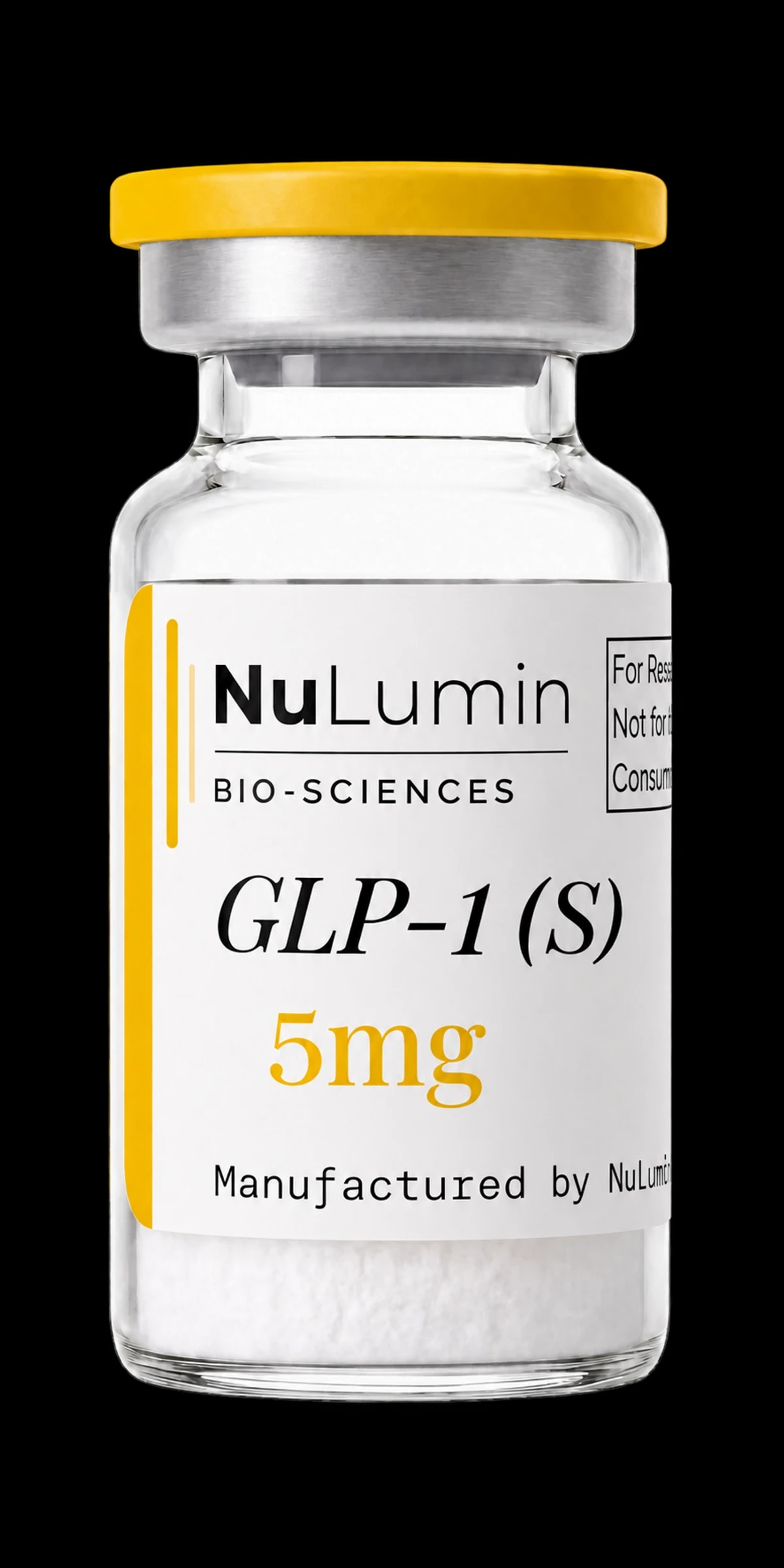
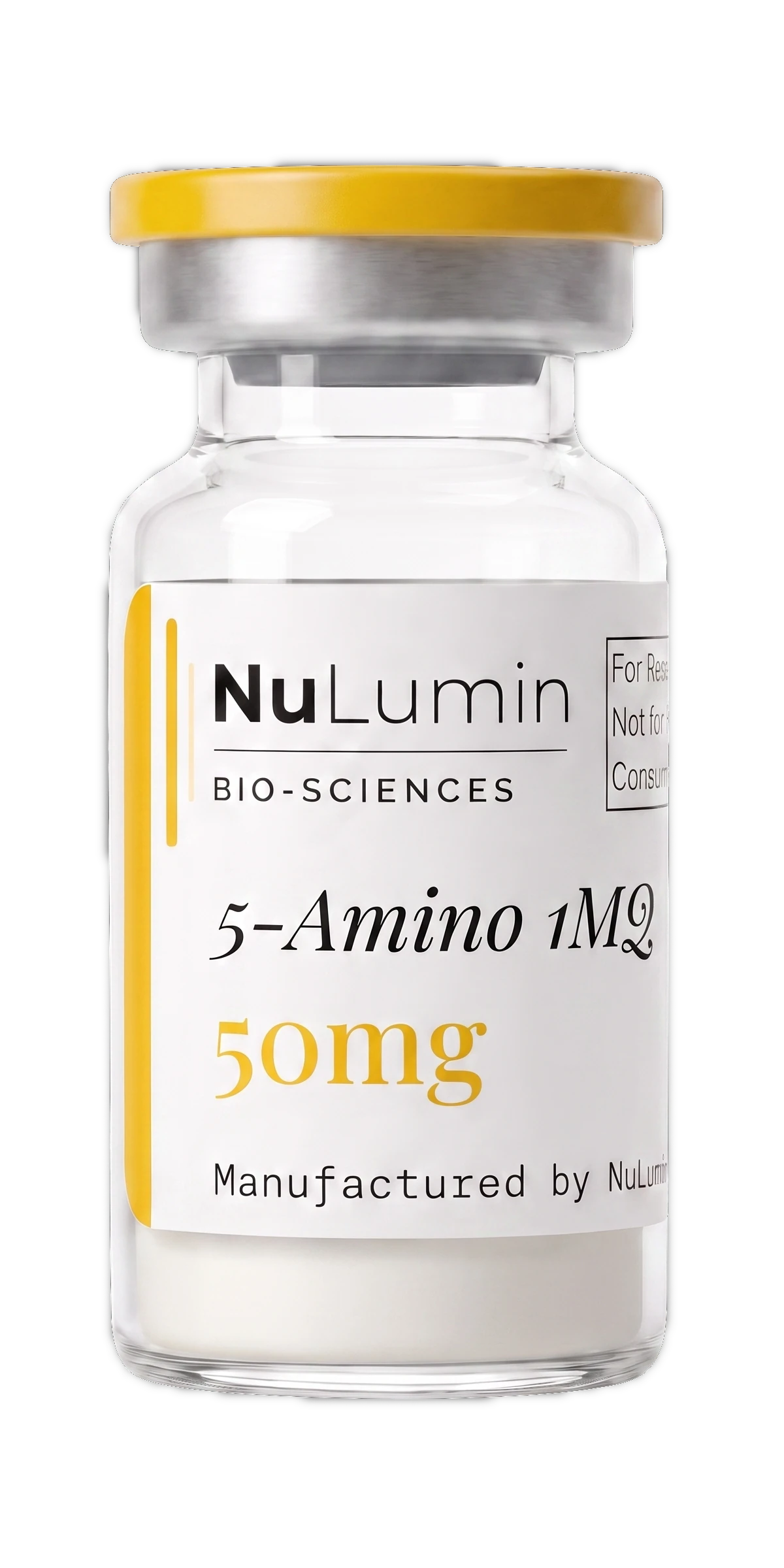
One sealed, light-protected vial per unit, holding lyophilized powder in the vial size you select, inside protective outer packaging. AOD-9604 is listed in 5mg and 10mg vials. The label carries the lot code for the batch that vial came from, printed beside a QR square that opens that batch's Certificate of Analysis.
Yes. In the literature and in other suppliers' catalogs it also appears as AOD 9604, hGH frag 176-191 and hGH fragment 176-191. Those names refer to the same compound. NuLumin lists it as AOD-9604, and that is the name used on this page, in the COA library, and on the certificate for every batch.
All lyophilized peptides ship in sealed, light-protected vials inside protective packaging. Lyophilized (freeze-dried) material is stable at room temperature, so orders do not require refrigerated shipping. Every shipment moves with tracking, and the tracking number reaches you by email once the order is on its way.
Packaging & handling policy →Lyophilized material is stable at room temperature - keep it sealed, dry, and out of direct light. After reconstitution, keep it at 4°C and use it within the window noted on that lot's Certificate of Analysis. The catalog storage line for AOD-9604 reads: Room temperature, protected from light and moisture. The handling guidance for the exact batch you receive is printed on the vial label and repeated on its certificate.
In-stock orders placed before 2:00 PM PT ship the same business day (Monday–Friday, excluding federal holidays). Orders placed at or after the cutoff, on weekends, or on holidays ship the next business day. Ground transit typically adds another 2–5 business days once the carrier has the parcel. We publish the processing window we control and do not promise a delivery date the carrier owns. Limited-time free shipping on every order. No minimum. No code needed. We ship within the United States only.
Shipping & handling details →Every catalog compound is manufactured to a ≥99% HPLC purity specification, with identity confirmed by mass spectrometry. Analytical testing is performed by an independent third-party laboratory, and every lot is released against its own Certificate of Analysis rather than a generic spec sheet reused across batches.
Browse the COA library →Eight analyses run on every batch: the seven parameters the certificate reports - Appearance, Purity, Microbials, Mycotoxins, Moisture Profile, Residual Solvents and Elemental Impurities - plus identity confirmation by mass spectrometry. Purity is verified by high-performance liquid chromatography against the ≥99% specification. Certificates are public before you buy, not something you request afterwards.
Read a certificate first →Every batch is assigned its own lot code while it is still in production, and that code is printed on the vial label and on the box beside a QR square encoding the same code. Scan the QR, or type the lot code into the COA library search, and you get the laboratory report for the batch in your hand - not an average and not a representative sample. The QR resolves when it is scanned, so a label printed before testing finished still lands on the current certificate.
Look up a lot code →Credit card, bank wire, or institutional purchase order. Card details are captured by the payment processor directly and never touch NuLumin's servers, and the exact card brands the live payment rail accepts are shown at checkout before you pay - so this page never has to guess them.
For Research Use Only. Not for Human Consumption. Every NuLumin compound is a research chemical supplied to qualified researchers and laboratories for in-vitro laboratory research. It is not a drug, supplement, or food, and it is not intended to diagnose, treat, cure, or prevent any condition. Placing an order confirms that you are at least 21 years of age and that the material will be used only for lawful research.
Terms of sale →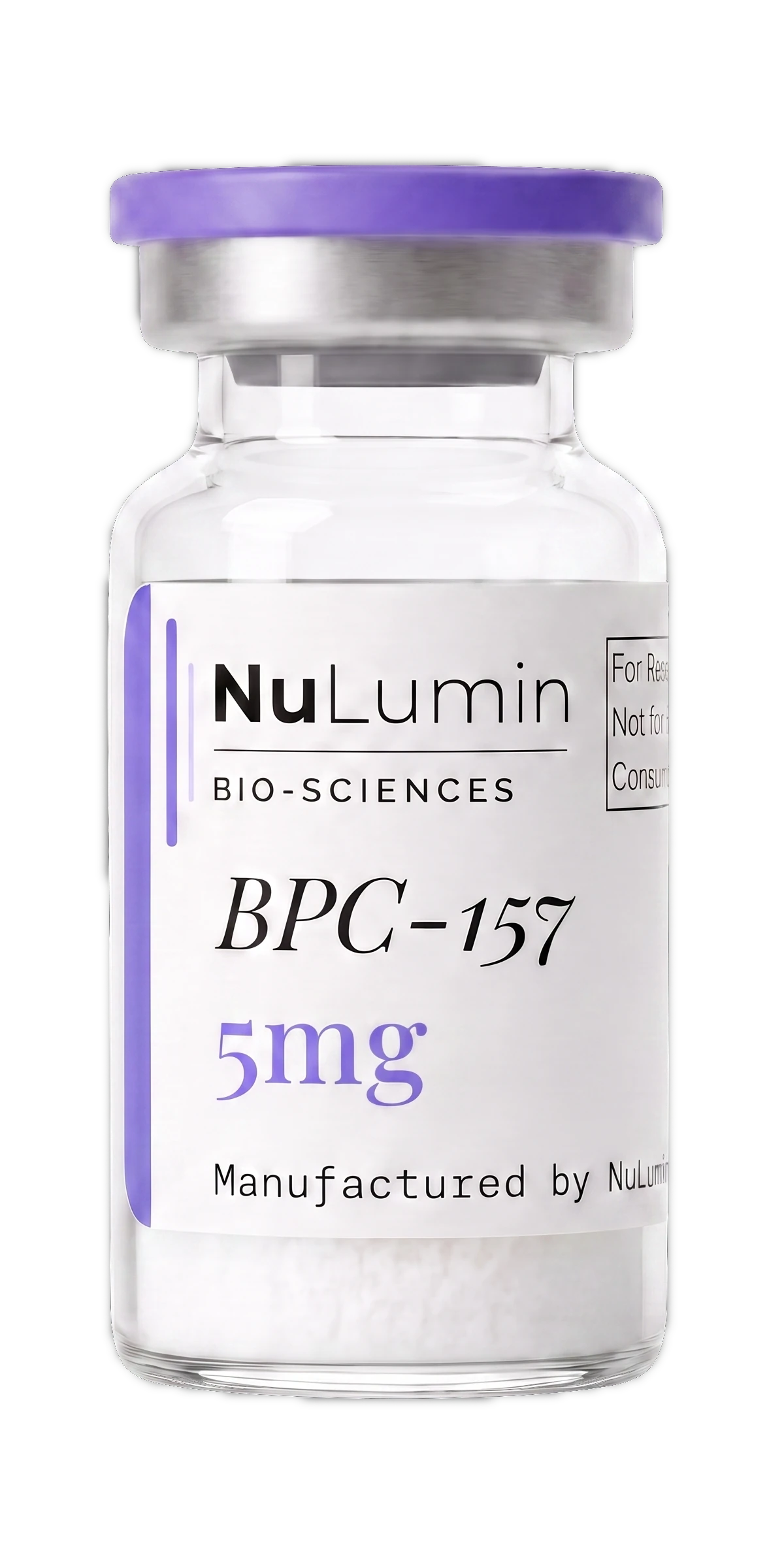
Both part of the curated cross-category Core Research Collection.
Buy one, get one: today's window closes at 11:59 PM PT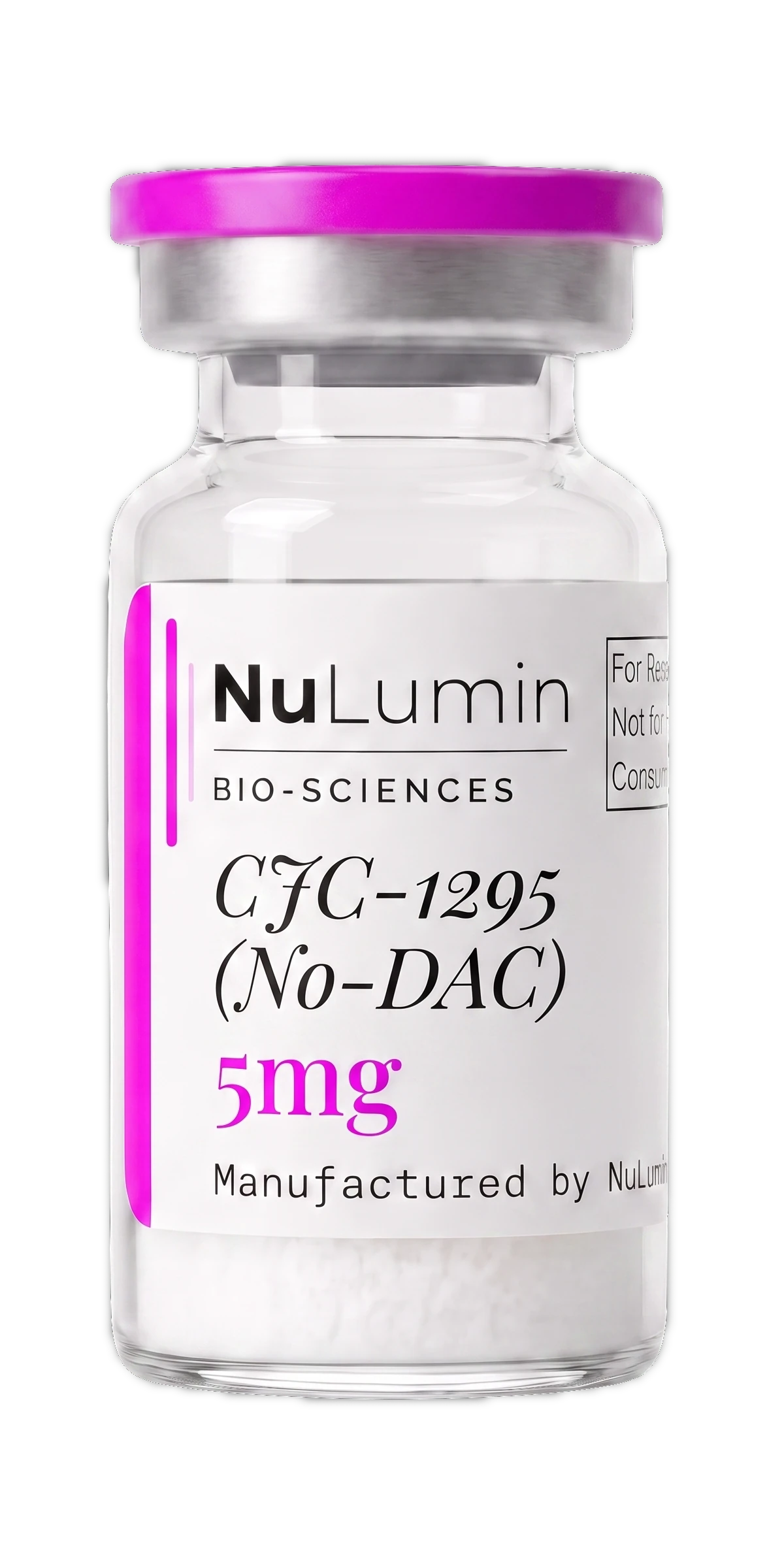
Both part of the curated cross-category Core Research Collection.
Buy one, get one: today's window closes at 11:59 PM PT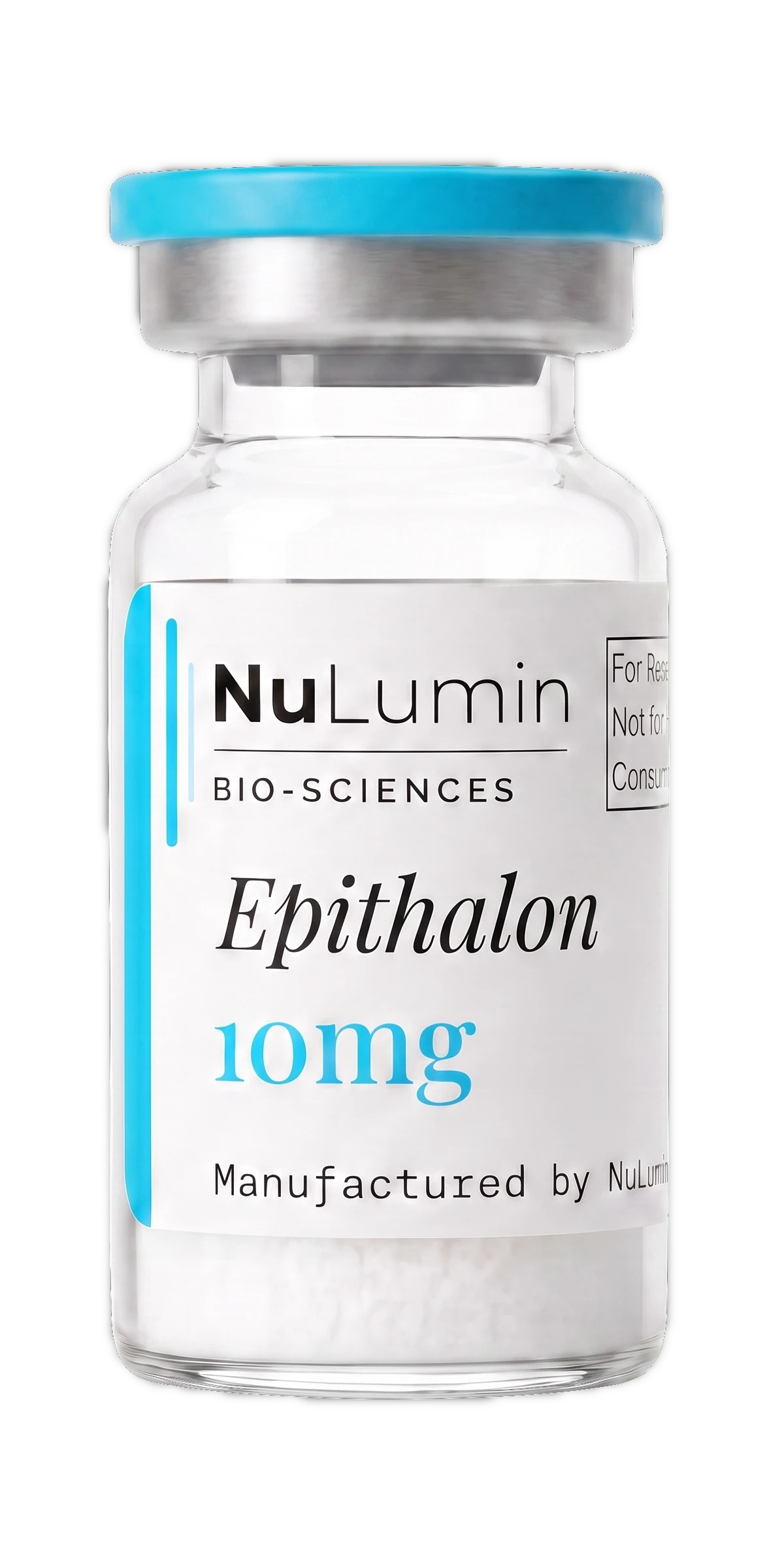
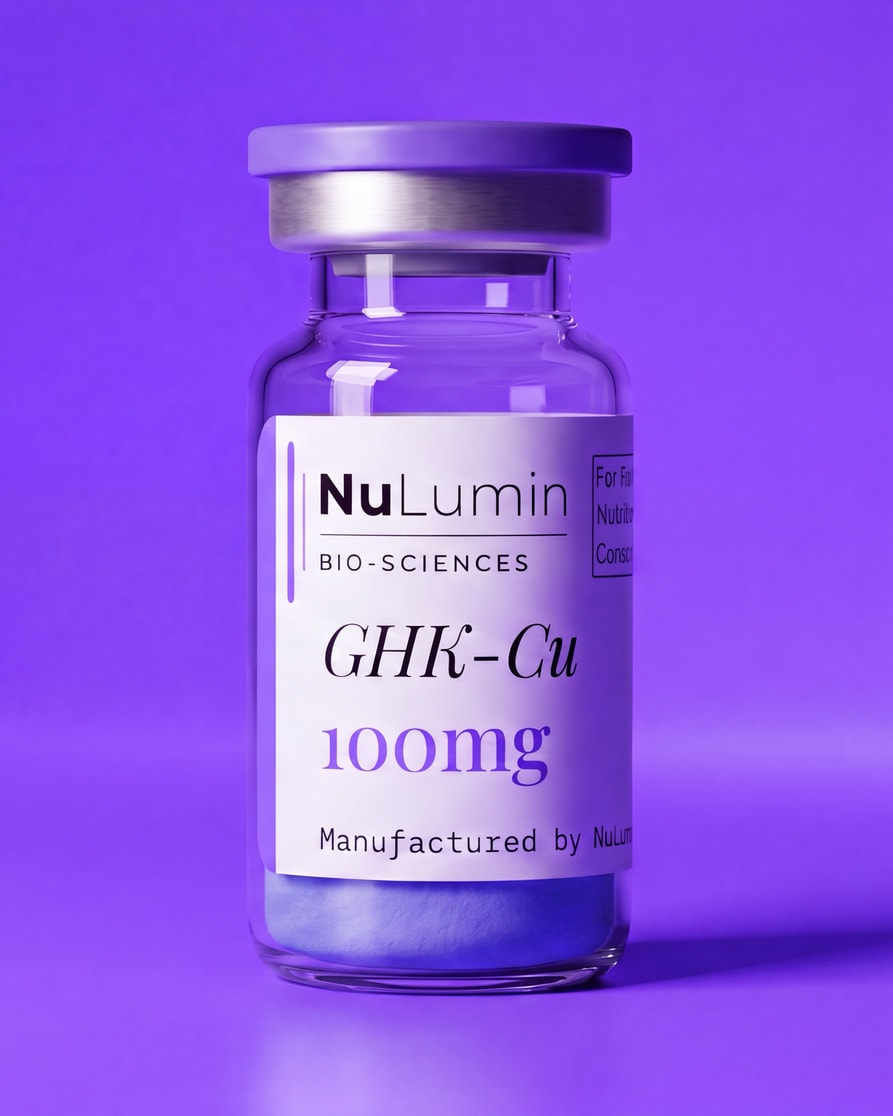
Every compound is lyophilized - freeze-dried to a dry cake and sealed in glass under the stopper. In that form it is stable at room temperature, so it ships and stores as an ordinary parcel with no special handling.